How to remove plaque from over 40,000 miles of your primary and tertiary arteries...
Do Not be one of those that Dies Every 3 minutes from Heart Disease!
Hardening and narrowing of arteries with restriction of blood flow is an inevitability of life. However, it does not have to be so severe that you suffer high blood pressure, angina, shortness of breath, restricted arterial flow, poor circulation, sexual dysfunction and other symptoms of blocked or constricted arteries.
There is a simple therapy that can now be done in the comfort of your own home to reduce these consequences of arteriosclerosis, that the American College for the Advancement in Medicine (ACAM) notes... “this therapy has been safely used and effectively utilised by physicians throughout the US and hundreds of thousands of patients have received demonstratable benefit from it. It consistently improves blood flow and relieves symptoms associated with the disease in greater than 80% of the patients treated”.
It is called EDTA Chelation Therapy. EDTA (Ethylene-diamine-tetra-acetic acid) is an amino-acid like molecule that when slowly infused into the blood stream, chelates (or binds) with minerals such as calcium, copper, iron and lead and carries them to the kidneys where they are excreted. Removal of these minerals and plaque obviously has many health benefits from lowering blood pressure, improving blood (and oxygen) flow, to improving arterial flexibility and overall nutrient transfer around the body...vital for health.
There are two types of Chelation Therapy: Intravenous and Oral
Intravenous is where most of the early published research has been carried out and has concentrated on determining optimum levels of EDTA - and Oral which has been developed subsequently by a group of practising doctors since the seventies. Intravenous is only offered by a handful of private clinics in the UK and costs upward of £2500. Oral chelation is slower in its rate of plaque and mineral removal, a lot cheaper, and without side effect, because the daily dosages are much lower.
Is EDTA Chelation safer than operations such as Angioplasty’s or Drugs?
Recent news has been particularly grim for advocates of invasive heart disease therapies, including angioplasty and bypass surgery. For instance, Dr W Boden published in the New England Journal of Medicine, a study tracking 920 heart attack patients for approximately 23 months Randomly divided into two groups, the patients were treated either surgically or non-invasively. He concluded... “Invasive strategy (patients) had worse clinical outcomes during the first year of follow-up. The number of patients (who died or had another heart attack) were significantly higher in the invasive-strategy group…” Boden concluded that: “Most patients with non-Q-wave myocardial infarction (a type of heart attack) do not benefit from routine, early invasive management…”
Others have similar findings: Dr T Preston wrote in MD magazine in 1995 that “fully half of the bypass operations performed in the United States are unnecessary… except in certain well-defined situations, bypass surgery does not save lives or prevent heart attacks...” ACAM developed EDTA chelation guidelines in 1973 and there have been no fatalities associated with the procedure.
“Intravenous chelation therapy is safe and proven to be more than three times as safe as taking an aspirin, according to the biotoxicological tests performed on laboratory animals,” states Dr J Trowbridge. Indeed, the “LD-50” - a lethal dose for 50 percent of those taking it – of EDTA is calculated at 2,000 milligrams per kilogram (mg/kg) of body weight of a human being, while aspirin has an LD-50 of only 588 mg/kg.
Chelogarde for Oral Chelation Therapy
Chelogarde was developed by two founders of ACAM – Doctors, Carl Pffeifer and Abraham Chaplan, and has been successfully used for some 30 years.
Some typical results shown after 24 days of using Chelogarde:
At the recommended dose of four capsules daily it has a combination of ingredients along with the EDTA that have helped thousands of people reduce or eliminate their arteriosclerosis problems. Benefits can be felt in as little as a month or less or it can take up to twelve months before significant benefit occurs in severe cases.
An Article By Dr. A. Chaplan...
The following article by Dr A. Chaplan is reprinted from The Journal of Preventative and Alternative Medicine.
Cardiovascular disease is completely a modern-day phenomenon. At the beginning of the 20th century, heart disease occurred so infrequently that it was barely a recognised condition. Today, thanks to all the adverse effects accompanying modern society (pollution, chemicals, processed foods, stress, etc), and despite advanced medical technology you have more than a 50% chance of dying from cardiovascular disease.
Most people do not start worrying about developing heart disease until they pass the 40 mark. In the past few years, however, reports started surfacing about signs of cardiovascular disease showing up as early as the teenage years.
Researchers at the Cleveland Clinic Foundation have recently found one in six teenagers who died in accidents and whose hearts were used for transplants, had the early signs of clogging of their arteries. Doctors performing autopsies on young people having died of non-disease-related causes frequently notice fatty streaks in the arteries of the children. The current situation is already a nightmare and what will happen to the next generation if this trend continues?
Slow Road to the Grave
All this clearly shows that heart disease is a progressive condition and takes many years to develop. The most common and the most insidious form of heart disease is arteriosclerosis – the hardening of the arteries. Arteriosclerosis is caused by a multiple of complex factors with homocysteine being the biggest culprit. The result is a plaque formation which accumulates on the inside of the arterial walls and blocks blood flow. The plaque (atheroma) is mostly composed of heavy metals, fibrous tissue, cholesterol and calcium.
As this plaque build-up becomes progressively thicker, the diameter inside the arteries becomes narrower, thereby decreasing the blood circulation through the whole body, including to the heart and brain. According to the previously mentioned Cleveland heart transplant study, the researchers also evaluated 41–50-year-old donors, and 26 of the 36 had blockages in their arteries. That is more than 70%! Can you imagine what the percentage must be like for people in their 50s, 60s or older?
Severe build-up will ultimately lead to heart attacks, stroke, senility, and possible amputation of extremities. Heart attacks are caused by blood clots in the coronary arteries, while strokes are brought on by a blockage or rupture of a blood vessel in the brain.
Plaque blockages in the blood vessels reduce the flow of blood, starving the vital organs of oxygen and other nutrients. Cell walls become leaky, allowing excess calcium, sodium, and other elements to enter. When calcium accumulates to a critical point it forms a concrete-like deposit. These calcifications can often be seen on an X-ray. Improper calcium metabolism can also cause coronaries and other arteries to go into spasm, further reducing blood to vital organs.
The list of problems caused by artery disease is truly staggering and not the least bit surprising since a fresh supply of oxygenated blood is necessary for the proper functioning of every organ. Even diseases caused by factors other than decreased blood flow are made worse by arteriosclerosis. A prime example is Alzheimer’s disease.
Alzheimer’s disease is mimicked by simple arteriosclerosis of the arteries and arterioles supplying the brain. Diabetes often deteriorates when blood flow to the pancreas is insufficient. A poor blood supply can also be responsible for a decreased production of digestive enzymes from the exocrine part of the pancreas, causing incomplete digestion. Lack of adequate blood flow to the stomach, and small intestines, results in poor digestion. It causes slowing of the colon which results in colon disease.
Which 50% Will You Fall into?
Decreased blood supply to the kidneys results in the inappropriate release of angiotensin by the kidneys, inducing hypertension throughout the vascular system. The joints, particularly the ones found in the lower back, become inflamed and painful when there is a reduction in blood flow to the area. Arteriosclerosis also plays a big part in the development of arthritis in various parts of the body.
The effect on the extremities can be as minor as cold hands and feet, or as severe as gangrene in advanced cases. Impotence can also be caused by decreased blood flow to the penis due to clogged arteries. Cancerous tumours are known to accelerate when blood flow is not voluminous enough to the affected tissue. When circulation is insufficient to the immune-competent cells in the bone marrow and spleen, the immune system is drastically weakened. The list of aches, pains, discomforts and diseases caused, or aggravated by arteriosclerosis is endless. Still, this condition has the most detrimental effect on the heart, causing angina pectoris (chest pain originating in the heart), and eventually infarction and death.
For arteries to remain healthy requires constant attention, from adolescence onward. Certain vitamins and minerals found in foods and supplements can provide protection to the 40,000 miles of arterial blood vessels. EDTA can also provide protection against the damaging effect of heavy metals, so prevalent in our air, food, water, and occupational contacts. /p>
These protective substances are called ‘chelators’ and ‘antioxidants’ because they can bond with the undesirable free radicals that are generated in our bodies, neutralise them and help the body dispose of them harmlessly.
You must do everything in your power to avoid getting to such a serious and often deadly state. With a healthy diet, the right vitamins, supplements and exercise, most cases of heart disease can be prevented. The only catch is that you must start paying attention to these things at a noticeably young age.
What can you do if you did not start eating right and exercising from childhood, but still want to avoid the sad statistics of every second dying from heart disease? Here are a few suggestions you can start working on immediately.
Exercise
It is never too late to start exercising. There is a decrease in the heart rates of previously sedentary people after just 18 weeks on a walking programme. Exercise assists in weight loss, strengthening the heart muscle, improving blood flow, reducing high blood pressure and raising HDL cholesterol levels while lowering LDL levels.
During sustained and vigorous muscle contraction the body also produces a metabolic by- product called lactic acid – an excellent chelating agent. In order to produce this chelating agent, you must exercise regularly (3-5 times a week).
The British Heart Foundation reports that people who do not exercise are twice as likely to develop coronary heart disease as those who exercise on a regular basis. If people who exercise suffer a heart attack, their risk of dying from it is half that of those who do not exercise.
Heart-Smart Diet
Dietary changes can be greatly beneficial in reversing and preventing heart and artery disease. Studies have shown, for example, that total fat intake is not the main culprit in coronary heart disease. However, the type of fat you consume is a significant factor. Trans-fatty acids, like margarine, raise LDL cholesterol and reduce HDL cholesterol. (High cholesterol may not cause heart disease but can be a contributing factor).
Here are some healthy dietary guidelines to follow:
Chelation Therapy - Chelation is for you if you suffer from any of these:
Arteriosclerosis, angina, poor circulation, stroke, chest pain or tightness, diabetes, Alzheimer’s disease, loss of memory, Chronic Fatigue Syndrome, impotence, immune disorders, lack of alertness, pain or tingling in legs or arms, lead poisoning, nutritional deficiencies, shortness of breath.
For some time now there has been a quite simple and natural way of cleansing your arteries of deadly plaque build-up. This method is called “chelation therapy”. The word “chelation” comes from the Greek meaning “crab”. The components of chelation therapy help “grab onto” (bond) and eliminate harmful substances from the circulatory system. Chelation therapy is available in two greatly beneficial forms: intravenous and oral. Intravenous chelation has been used with great success for many decades.
The only drawbacks are that you must find a qualified physician to administer it, you need numerous treatments (anywhere from 20-50, lasting 3-4 hours each) and it costs between $2000 and $4000. (Which is nothing compared to the price tag for the average bypass or angioplasty surgery. Not to mention the fact that both procedures unclog only a few inches of the arteries while chelation cleanses the entire system).
Chelation therapy was first introduced in the U.S. in 1948 as a medical treatment for industrial workers who suffered from lead poisoning. Shortly thereafter the U.S. Navy prescribed chelation therapy for sailors who had absorbed lead while painting government ships and dock facilities. In the years since chelation therapy has remained the undisputed treatment of choice for lead poisoning, even in children with toxic accumulation of lead in their bodies as a result of eating leaded paint.
During the 1980s a more accessible form of chelation therapy was developed, one that could be taken orally. This new discovery made chelation as simple as taking a vitamin and brought the price down to about one tenth of the intravenous treatment.
In the early 1950s it was speculated that EDTA chelation therapy might help the accumulations of calcium deposits associated with hardening of the arteries. Experiments were performed and victims of arteriosclerosis experienced various health improvements following chelation – diminished angina, better memory, improved vision and hearing, and increased energy. Several physicians then began routinely treating individuals who suffered from cardiovascular conditions with chelation therapy. Consistent improvements were reported for most patients.
According to a recent Danish study:
EDTA, a main component in chelation works by bonding to plaque, metals, and debris in the circulatory system and removing them through the body’s elimination system. Some metals such as lead, mercury, and cadmium are poisons. Lead and cadmium levels correlate with high blood pressure. All metals, even essential nutritional elements, are toxic in excess or when abnormally situated. EDTA normalizes the distribution of most metallic elements in the body. EDTA improves calcium and cholesterol metabolism by eliminating metallic catalysts which cause damage to cell membranes by producing “oxygen free radicals”.
Free radical pathology is now believed by many scientists to be an important contributing cause of heart disease, cancer, diabetes, and other diseases of ageing. EDTA helps prevent the production of harmful free radicals. A big advantage of EDTA is that it does not cause any adverse reactions. It bypasses the digestive system entirely and, owing to its small molecular size, enters the bloodstream further down the digestive tract.
The Politics of Heart Disease
Every single study published on the use of chelation therapy for arteriosclerosis has described an improvement in blood flow and symptoms. Adverse editorial comments to the contrary lack evidence and stem primarily from physicians with a vested interest in catheterisation and surgery. Chelation therapy promotes health by correcting the major underlying cause of arterial blockage. Damaging free radicals are increased by the presence of metallic elements and act as a chronic irritant to blood vessel walls and cell membranes. Chelation therapy removes those metallic irritants, allowing leaky and damaged cell walls to heal. The plaque is dislodged, permitting more blood to pass through. Arterial walls become softer and more pliable, ensuring easier expansion. Scientific studies have shown that blood flow and circulation greatly increase after chelation therapy.
One must wonder if such an effective, natural, and economical treatment exists for heart disease, why doesn’t the whole world know about it? Why is there no mention of it on TV, nothing written in newspapers, or better yet, why don’t our doctors inform us about it? To find the answer to these questions we must look at the politics behind heart disease. Circulatory disease has become a multi-billion-pound a year industry. Hospitals, drug companies, surgeons, physicians, assistants and countless others make very hefty profits from our diminishing health. If everyone knew about and used chelation therapy, there would be truly little need for expensive bypass and angioplasty surgeries and costly hospital stays and medications.
It is also interesting to note that the patent on EDTA ran out in 1948, following which any company could produce it. This brought the price down very considerably. No matter how effective a substance is, when the patent expires it will probably not be heavily promoted again. Drug companies have no financial motivation to advertise EDTA to doctors. This type of advertising, believe it or not, is the most important factor in determining which drugs many doctors prescribe. Doctors receive the bulk of their continuing education through such advertising. So, chances are most doctors are not even aware of chelation therapy. Therefore, even doctors who might otherwise recommend natural treatments are often not properly informed. And those who have the most to gain from our present system will make sure that things stay that way!
Therefore, we must take charge of our health and take matters into our own hands. Prevention is always the best medicine, but it is never too late to make lifestyle changes. Exercise, a healthy diet and the right supplements can all ensure that we do not fall victim to today’s number one killer – heart disease. Hopefully, by showing a positive example to our children and grandchildren, the next generations will only read about cardiovascular disease in history books.
Chelation Therapy - More History, Development & Evidence...
As Dr Chaplan states in his article, Intravenous Chelation has been around for over 50 years and originated by Nobel Prize winner Dr Alfred Werner, who developed and introduced special de-clogging and cleansing agents directly into the bloodstream in the 1930’s.
Subsequent development did not occur until the 1950’s when in 1956 Dr Norman Clarke, Director of Research at Providence Hospital in Detroit applied Intravenous Chelation Therapy (ICT) to the treatment of Cardiovascular disease. He found it extremely effective in dissolving arterial calcium deposits and an excellent overall treatment for Atherosclerosis. He subsequently showed it was also extraordinarily successful in relieving the incidence & pain of Angina Pectoris.
In the 1970’s Dr Carl Pffeifer Principal of the Brain Bio Centre in California began his search for a ‘holding treatment’ that could be used in place or alongside ICT, which his patients could take home. His research was so successful that many patients no longer needed ICT after taking his ‘supplementary oral mixture’ for a few months. It proved extremely effective both in assisting the removal of plaque as well as prohibiting the formation of new plaque.
In the late 70’and early 80’s when Dr Chaplan joined Dr Pffeifer the oral mixture was developed and refined to its current mixture and became available in a capsule form - called Chelogarde.
The Proof
In the 1980’s Dr’s Olszewer and Carter did a retrospective analysis of treatment results from 2,870 patients, with various chronic degenerative and age-associated diseases that had tried Chelation Therapy. They concluded that EDTA chelation therapy resulted in ‘marked’ improvement in 76.89 percent and ‘good’ improvement in 16.56 percent of patients with ischemic heart disease; also, ‘marked’ improvement in 91 percent and ‘good’ improvement in 7.6 percent of patients with peripheral vascular disease and intermittent claudication (limb weakness).
Within the patients who suffered with cerebrovascular and other degenerative cerebral diseases, 24 percent had ‘marked’ improvement, and 30 percent had ‘good’ improvement. Of four patients with the skin condition scleroderma, three had ‘marked’ improvement and one had ‘good’ improvement. Seventy five percent of all of the patients had ‘marked’ improvement in “geriatric symptomatology of vascular origin.
As Dr Chaplan wrote in his article the Danish study in the 90’s showed that the condition of 85 percent of a group of 470 cardiovascular patients treated with EDTA chelation therapy improved. Within that group 72 of which were awaiting coronary bypass surgery, 65 percent subsequently did not require the operation following EDTA chelation therapy.
Is Chelation safer than operations such as Angioplasty’s or Drugs?
Recent news has been particularly grim for advocates of invasive heart disease therapies, including angioplasty and bypass surgery. For instance, Dr W Boden published in the New England Journal of Medicine a study tracking 920 heart attack patients for approximately 23 months randomly divided into two groups, the patients were treated either surgically or non-invasively. He concluded…“Invasive strategy (patients) had worse clinical outcomes during the first year of follow-up”. The number of patients (who died or had another heart attack) were significantly higher in the invasive-strategy group…” Boden concluded that: “Most patients with non-Q-wave myocardial infarction (a type of heart attack) do not benefit from routine, early invasive management…”
Others have similar findings: Dr T Preston wrote in MD magazine in 1995 that “fully half of the bypass operations performed in the United States are unnecessary… except in certain well-defined situations, bypass surgery does not save lives or prevent heart attacks...”
The American College for Advancement in Medicine (ACAM) developed EDTA chelation guidelines in 1973 and there have been no fatalities associated with the procedure.
“Intravenous chelation therapy is safe and proven to be more than three times as safe as taking an aspirin, according to the biotoxicological tests performed on laboratory animals,” states Dr J Trowbridge. Indeed, the “LD-50” - a lethal dose for 50 percent of those taking it - of EDTA is calculated at 2,000 milligrams per kilogram (mg/kg) of body weight of a human being, while aspirin has an LD-50 of only 588 mg/kg.
Won’t an Oral Chelating Formula Deplete My Body’s Calcium?
One may wonder about the possibility of chelation therapy causing a lack of calcium in the bones and structural system of the body, ultimately causing osteoporosis or a similar disorder. The answer to this is a strong “NO”. The reason for this is that the form of calcium used by the body - called calcium apatite - is different from that bound by EDTA, and virtually impossible to be chelated by something like EDTA. Several studies targeting the possibility that EDTA causes bone calcium loss have indicated it does not. Instead, it can stimulate dormant bone-forming cells and thus combat osteoporosis.
You can safely take a calcium supplement without defeating the chelation process. Calcium supplements will not interfere with chelation particularly if each supplement is taken as far apart as possible. Ideally, if an oral chelating formula is taken at 7 am any calcium supplements should be taken at 7 pm to give the bones and tissues time to absorb what is needed and eliminate the rest.
Plaque Formation leads to Arterioscleriosis
Plaque is initiated by damage to the walls of blood vessels from free radicals, whose activity is promoted by such things as drugs, pesticides, radiation and oxidised (bad) LDL cholesterol. Free radicals are produced by the body’s energy-production system and escape to cause harm when antioxidant minerals and vitamins are deficient. A quick feed of glucose to the blood as a result of a meal containing sugar and white flour will cause an insulin response, and this hormone severely irritates blood vessel linings.
Once blood vessel linings are damaged a fatty layer develops underneath the surface layer of cells lining the blood vessels. Oxidised LDL cholesterol from the bloodstream is the usual cause of this. Eventually, these layers are dislodged, and the platelets adhere to the damaged surface. These red blood cells then start sticking together in clumps, and release substances which trigger the formation of a rough fibrous layer of cells.
Cholesterol can now stick to the coarse roughened fibrous surface very easily. In time this becomes hardened with a layer of calcium, and arteriosclerosis is a reality. The final step in Cardio-vascular disease is that sticky platelets form a thrombosis, and completely block an essential blood vessel in the heart (coronary thrombosis), in the brain (stroke) or an artery supplying the legs. The process is insidious and even one year old children show some lesions.
How Chelation Therapy Helps Arteriosclerosis & Other Ailments
Scientifically a ‘Chelate’ is a co-ordination compound (such as haemoglobin) in which a central metallic ion is attached to an organic molecule at two or more points. In Chelation therapy, heavy metal poisoning (from lead, mercury, etc) or other diseases, are treated by substances which combine chemically with toxic substances (including cancer inducing free radicals) and render them harmless. Chelation derives from the Greek word for a crab and reflects the ‘grabbing’ mixture of the oral formula. In addition to removing toxic metals from the body, chelation removes excess blood calcium, improving oxygen and nutrient flow to all regions of the body simultaneously. Increased blood flow and oxygen transportation bring unequalled vigour and vitality to every part of your body.
Intravenous or Oral Chelation?
The only true advantage that Intravenous Chelation Therapy (ICT) has over Oral Chelation is speed. Whilst a typical course of ICT (10-20 courses) would last 5-10 weeks the equivalent oral course would be anything between 6 and 12 months. Oral Chelation will be significantly less expensive however!
Dr Pffeifer’s and Dr Chaplan’s – Oral Mixture
The product developed by them and sold in the USA for the past 20 years is called ‘Chelogarde’. It has been so successful during the month of February when there is an annual National Heart Campaign, Chelogarde is recommended and advocated in most newspapers and health food stores across the USA.
Each container has 60 capsules and ideally you take 4 per day for at least 30 days or until symptoms such as Angina go away. Thereafter you continue to take 2-4 per day dependent upon the extent of your cardiovascular problems, or 4 capsules for 1 week in 4 thereafter, to limit further plaque build-up (as plaque begins to reform after 2-3 weeks).
If you wish to undertake the equivalent of a full ICT course, then remember 120 capsules does approximately the work of 1 ICT course only.
References:
1. Boden, W.E., et al. (1998). “Outcomes in patients with acute non-Q-wave myocardial infarction randomly assigned to an invasive as compared to a conservative management strategy,” New England J Med, June 18; 338(25):1785-1792.
2. Brecher, H. and Brecher, A. (1992). Forty Something Forever: A Consumer’s Guide to Chelation Therapy and Other Heart-Savers, Healthsavers Press, Herndon,VA.
3. Cranton, E.M. and Frackelton, J.P. (1984). “Free Radical Pathology in Age-Associated Diseases: Treatment with EDTA Chelation, Nutrition and Antioxidants,” J Holistic Med, 6:1.
4. McDonagh Medical Center. Chelation Therapy: History and How It Works.
5. Olszewr, E. and Carter, J, P. (1988). “EDTA chelation therapy in chronic degenerative disease,” Med Hypotheses, Sep; n 27(1):41-9.
6. Olszewr, E., et al. (1990). “A pilot double-blind study of sodium-magnesium EDTA in peripheral vascular disease,” J Nat Med Assoc, 82(3):173-177.
7. Preston, T.A. (1995). MD Magazine, February.
8. Trowbridge, J.P. (1988). The Healing Powers of Chelation Therapy, New Way of Life, Inc., Stamford, CT.
9. Woodland Publishing - Chelation Therapy by M C Hawken – ISBN 1885670958
Where Is The Proof?...
Where is the Proof EDTA Chelation Therapy is an Effective Approach for Reversing Arteriosclerosis?
In 1956 while Dr Norman Clarke was treating a battery worker in the USA for lead poisoning using EDTA, the patient noticed that his symptoms of angina disappeared.
Between 1956 and 1960 Dr Clarke and his colleagues treated 283 patients with EDTA ‘Chelation therapy’ – 87% showed improvements in their symptoms. Heart patients got better, angina disappeared or was significantly improved and patients with blocked arteries – particularly those with diabetes – avoided amputation.
Since the 1980’s numerous FDA-approved studies have demonstrated impressive results. In the 1980’s Dr’s Olszewer and Carter did a retrospective analysis of treatment results from 2,870 patients, with various chronic degenerative and age-associated diseases that had tried Chelation Therapy.
They concluded that EDTA chelation therapy resulted in ‘marked’ improvement in 76.89% and ‘good’ improvement in 16.56% of patients with ischemic heart disease; also, ‘marked’ improvement in 91% and ‘good’ improvement in 7.6% of patients with peripheral vascular disease and intermittent claudication (limb weakness).
Within the patients who suffered with cerebrovascular and other degenerative cerebral diseases, 24% had ‘marked’ improvement, and 30% had ‘good’ improvement. Of four patients with the skin condition scleroderma, three had ‘marked’ improvement and one had ‘good’ improvement. Seventy five percent of all of the patients had ‘marked’ improvement in “geriatric symptomatology of vascular origin.
A recent review of the published data, by P M Kidd in 1999, found that Chelation therapy benefits cardiovascular symptoms in more than four out of five patients.
Hundreds of positive studies have been completed that show EDTA is a simple, effective approach to gradually reverse most forms of arteriosclerosis. It helps to detoxify and restore blood flow throughout the entire arterial system, eventually clearing the micro as well as the macro blood vessels.
As a result, thousands of doctors mainly in America and Germany treat their patients with EDTA Chelation therapy are reporting some remarkable results..
Why Isn’t mainstream Medicine Using EDTA Chelation therapy?
There are two main reasons:
1. The patent that was held on EDTA Chelation therapy expired in the sixties - there being no financial motivation for drug companies to fund further research as they could not then ‘re-patent’.
2. A surgical approach to Heart and Vessel disease is more financially lucrative.
You may say this is a cynical view but isn’t profit often put before lives.
User Testimonials
Chelogarde Ingredients
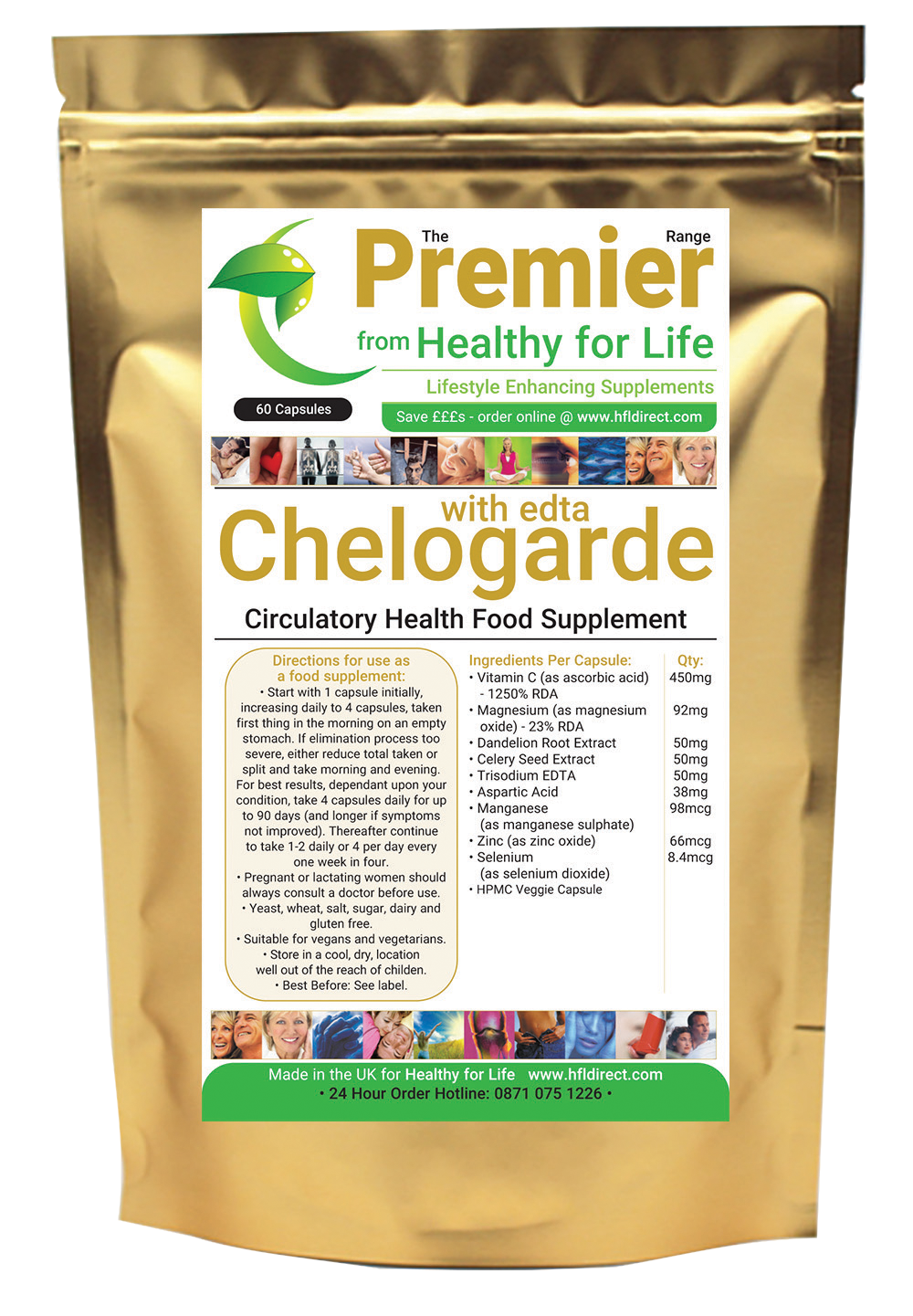
Per Capsule:
Dosage:Start with 1 capsule initially, increasing daily to 4 capsules, taken first thing in the morning on an empty stomach. If elimination process is too severe, either reduce total taken or split and take morning and evening. For best results, dependent upon your condition, take 4 capsules daily for up to 90 days (and longer if symptoms not improved). Thereafter continue to take 1-2 daily or 4 per day every one week in four.
Health 24/7
Copyright © 2021. All rights reserved.